API Throughput and Validation Architecture for Thousand-Loan-Package Monthly Volumes
Validation and queue design determine whether extraction errors propagate or stay contained.

An invoice and closing disclosure extraction API for mortgage operations at scale needs more than fast document processing. At a thousand loan packages monthly, reliability depends on queues that contain failures, field-level validation that catches wrong values, and contractual accountability for extraction accuracy. The volume exposes the architecture, and extraction errors become underwriting problems when that architecture lets them through.
Why a thousand mortgage loans a month exposes architecture, not just throughput
A loan package is a bundle of pages. Pay stubs, W-2s, bank statements, tax returns, insurance applications, and voided checks each need classification and extraction. Their contents then need checking against one another before underwriting can safely use them. At roughly a thousand packages a month, the bottleneck shifts from staff capacity to the design of that processing chain. Errors that staff could absorb at lower volume begin to compound into rework, compliance exceptions, and delayed decisions.
Deephaven Mortgage’s API-integrated platform closed 16 DSCR loans in May 2023, reached 199 after a year, and surpassed 300 per month as the integration matured. Its trajectory puts infrastructure design at the center of growth, alongside market demand. Speed depended on the system behind the transaction. Although those volumes are below a thousand monthly, the example shows why extraction cannot be treated as a commodity step bolted onto an otherwise finished lending workflow.
How the document intake pipeline actually breaks at production volume
Production failures often begin with manageable defects that interact. Re-delivery storms occur when a queue’s visibility timeout is shorter than the P99 processing time, so another worker receives a document that is still being processed. Misclassification routing sends a document to the wrong extraction pipeline, even when the classifier looked accurate in evaluation. The resulting output can be structurally invalid without downstream checks catching it. Cascading OCR error amplification adds another failure path, as small character errors compound across processing stages.
Complex layouts make that amplification harder to contain. Tables, handwriting, and mixed content can make traditional OCR too inaccurate for underwriting inputs. A pipeline can thus finish every processing step and still produce data that cannot be trusted. More processing capacity helps only if the system also separates clean documents from anomalies such as missing fields, inconsistent figures, and incomplete forms.
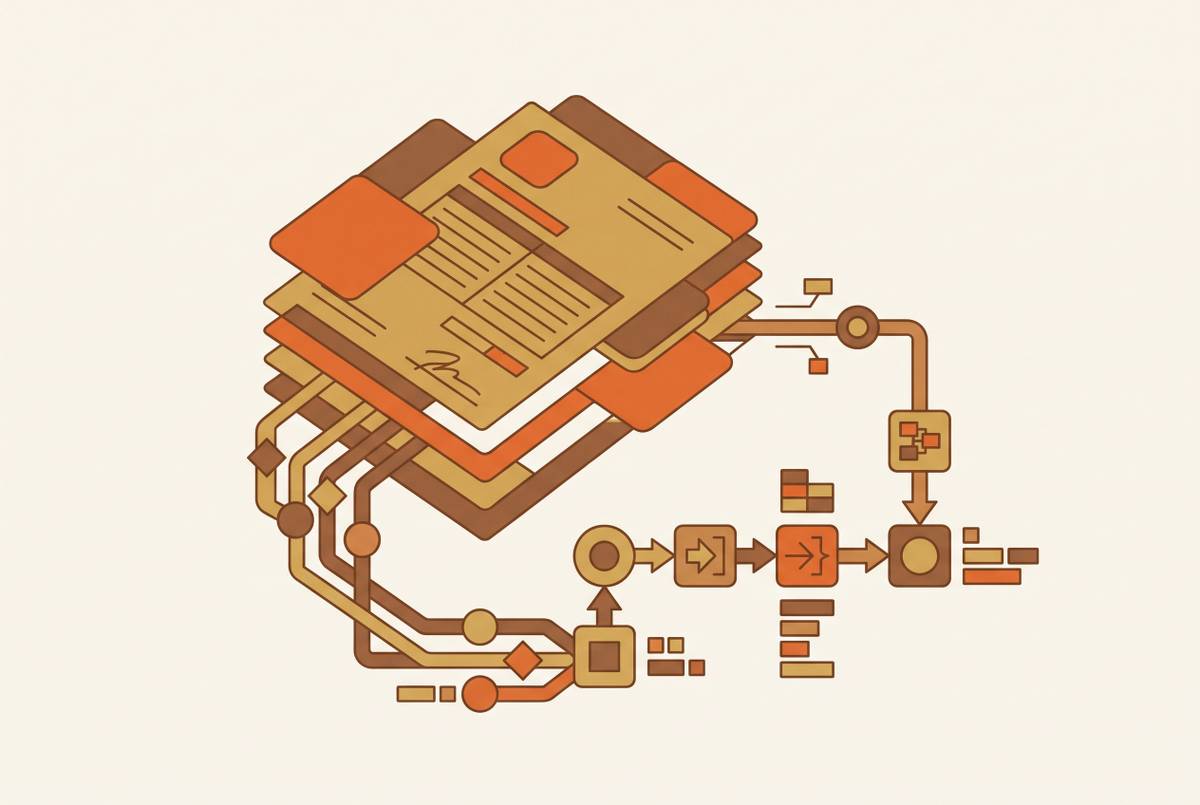
AWS’s IDP Accelerator illustrates that separation by classifying and extracting documents, flagging anomalies, and routing exceptions for human review. For a borrower’s uploaded pay stub, the intended path is short. Within seconds, the system should identify the document type, extract income, check it against other file data, and route verified data to the loan origination system, or LOS. Re-delivery, misrouting, and error amplification are the production conditions that interrupt that path.
Queue architecture decisions that determine whether failures stay local or propagate
A visibility timeout is a queue setting that governs failure containment. It must sit significantly above P99 processing time rather than average processing time, because the slower documents are still in flight when an average-based timeout expires. Those documents can then be delivered to other workers. Under load, duplicate work feeds the re-delivery storm. If duplicate extractions produce conflicting records, the problem spreads from the processing queue to the LOS.
Documents that use up their retries should go to a dead-letter queue for human review so they stay out of the main queue without being silently lost. A corrupted PDF should remain an isolated exception. Without that route, it can prevent the entire package from completing. The queue therefore needs to distinguish work that can proceed from work that needs intervention, rather than treating every failure as a reason to try again indefinitely.
An income comparison cannot run until both the pay stub and W-2 have been extracted. Apache Airflow supports processing dependencies and retry logic so those steps can run in dependency order. Capacity must also cover the busiest lending periods as well as the average month. The accelerator’s serverless, pay-per-use architecture scales with spikes without pre-provisioned capacity or temporary staffing, but even with more workers, steps must run in the order their dependencies require.
Per-field validation as the mechanism that catches extraction errors before they reach underwriting
Queue design contains failures in transit, while field validation tests what arrives. A system scoring 95% overall on a mortgage document may perform very differently on an income figure and a borrower’s address. Those errors have different consequences for underwriting decisions. Using the same acceptance rule for both can leave the high-risk field with too little review or waste time reviewing the lower-risk one. The relevant decision is whether a particular value is safe to accept.
Three-tier routing turns that distinction into an operating model. Fields above a high-confidence threshold go through automatically, those in a middle band go to human review, and those below a low threshold go to manual classification. Each threshold must reflect the cost of an error in that field.
Raw model scores are typically overconfident, and a high-confidence value can still be hallucinated. Calibration must connect the score to correctness and make the value traceable to pixels on the page. JSON schema enforcement checks only shape, so correctness still requires proof. A hallucinated income figure can fit the schema perfectly and remain wrong until someone compares it with the source.
What field-level SLAs and accuracy guarantees actually mean for a lending operation's risk exposure
If a vendor will not commit to accuracy in an SLA, the lender absorbs the extraction error risk, including rework, buybacks, and compliance exceptions. An accuracy commitment makes responsibility contractual. Its scope needs to reach individual fields because a document-wide score does not describe the risk attached to an incorrect underwriting input. The absence of that commitment is a structural risk position.
Straight-through processing depends on the same distinction between completion and correctness. A system that automatically approves documents without per-field confidence thresholds allows errors through without review. Deephaven’s experience at 300+ DSCR loans per month shows that keeping the same speed as volume grows takes infrastructure that can keep up. In investor lending, a document error that delays closing can send the borrower to a competing offer, so accountability extends beyond the expense of correcting a field.
The data security architecture that regulated lending volumes require by default
A thousand loan packages a month means thousands of documents that hold Social Security numbers, income figures, bank account data, and personal identification. Keeping that content “just in case” creates an active liability. Zero retention belongs in the processing design from the outset. The choice changes what the extraction layer keeps after its work is done. It also decides whether keeping track of the work requires keeping sensitive borrower content.
GDPR Article 25 sets out Data Protection by Design and by Default. SOC 2 Trust Criteria CC6.1 covers logical access security through the software, infrastructure, and architectures that protect information assets. Retention controls fall under the optional Privacy and Confidentiality categories and are outside the scope of CC6.1. Zero-retention processing builds data minimization into the architecture, but a certification label alone cannot show what the vendor keeps.
Auditability does not require retaining prompt or response content. A zero-retention architecture can log timestamps, session identifiers, latency, policy enforcement outcomes, and anomaly flags without storing the borrower data being processed. SOC 2 and audit log support are the least that is needed here. Cross-border lending operations also need appropriate EU or US data residency controls. Institutions whose regulatory posture prohibits cloud processing of borrower PII need an on-premise deployment option, making deployment architecture part of the data-handling decision.
Build versus buy at a thousand loans monthly: where the calculus actually lands
Building extraction looks tractable when the common documents dominate testing. Starting with the document types that represent most volume is sound engineering practice, but the remaining types keep arriving as exceptions. Each still needs to be handled as formats and regulatory requirements change and lenders add products. The work persists after the initial release. At production volume, the engineering obligation includes not just extraction but the queues, validation paths, and security controls that keep unusual documents from disrupting ordinary ones.
Custom connections between document AI systems and LOS stacks also need to be kept working over time. Compliance work, including SOC 2, GDPR DPIA, and a BAA path, adds fixed overhead regardless of volume. A vendor shares those costs across all its customers. That difference makes the hybrid model the practical answer for most lending operations at this scale. The recommended split is to buy intake and extraction with a contractual accuracy guarantee, while building the reasoning and decisioning layer where the lender’s underwriting IP resides.
The maintenance comparison also depends on how corrections change performance. A static OCR tool improves only when retrained on a new dataset, while a document AI system with continuous learning can improve in real time from corrections. New formats and updated templates therefore have different consequences for the two approaches. One requires a retraining cycle to incorporate the learning. At a thousand loans monthly, that distinction can produce meaningful accuracy differences over a year, so ongoing adaptation belongs in the build-versus-buy calculation.
The architectural checklist for a thousand-loan monthly pipeline ready to scale further
For a team evaluating readiness, the test should cover five properties. Those properties are calibrated per-field confidence, failure-containing queues, package-wide cross-document validation, zero-retention processing with SOC 2 and ISO 27001 certification, and a contractual accuracy SLA. Each needs evidence at its own boundary. A high extraction score does not establish queue resilience, and a security certificate does not establish field accuracy. The evaluation should keep those claims separate.
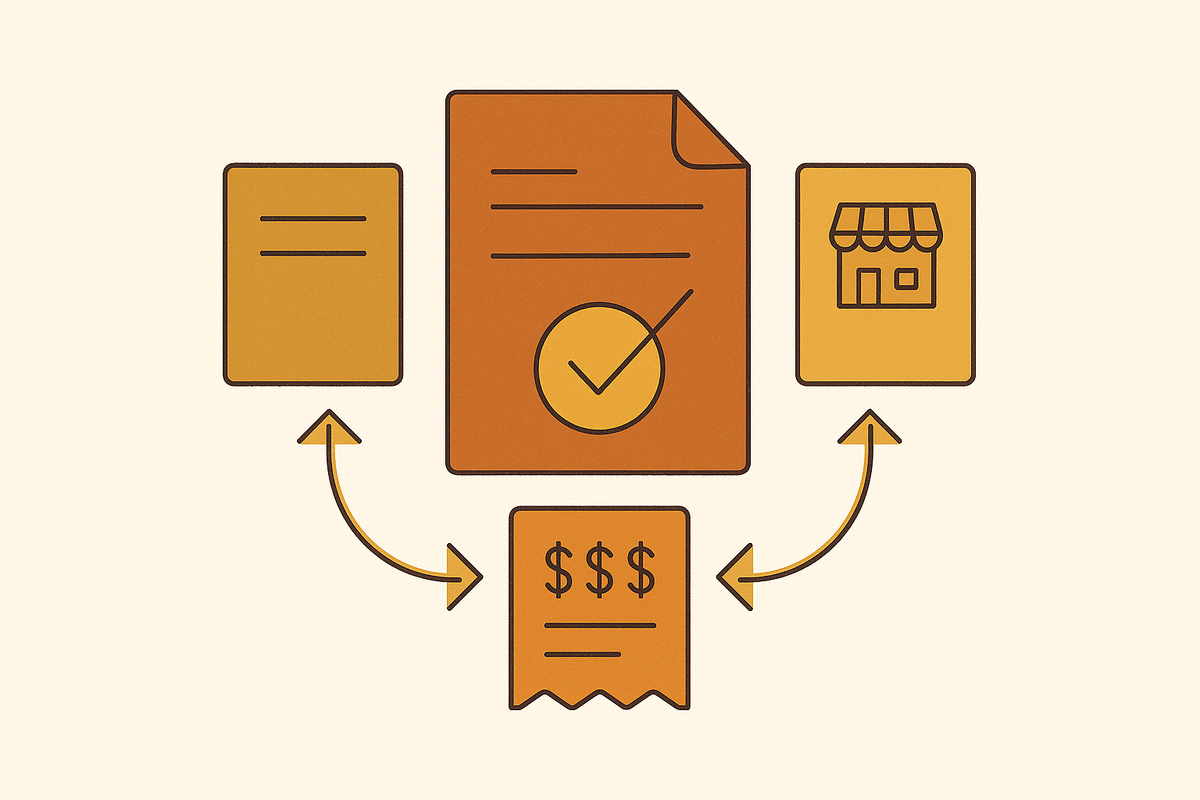
For acceptance decisions, thresholds should be calibrated against held-out ground-truth data and the actual cost of each field error. The three routes must distinguish auto-acceptance, human review, and manual classification. For processing, readiness means visibility timeouts well above P99, dead-letter handling, dependency ordering, and serverless or auto-scaling capacity for peaks. Package checks must reach across document boundaries. That includes income comparisons among pay stubs, W-2s, and tax returns, balance comparisons between bank statements and borrower-stated assets, and completeness checks before underwriting.
For data handling, the evaluation should establish zero retention of document content after extraction, content-free audit logs, suitable residency controls, and an on-premise option where cloud restrictions apply. Per-correctly-processed-page pricing aligns vendor incentives with accuracy, while a specific per-field SLA transfers extraction error risk through the contract. A pipeline that meets these criteria can handle a thousand monthly loans and scale further without redesigning its failure containment, validation, and data-handling foundations.